Going National
Ted Turner and the death of regional culture.

Around when Ted Turner died this week at 87, filmmaker Werner Herzog showed up as a commentator on Netflix’s 4-part documentary about wrestler Hulk Hogan. Herzog then gave an interview to The New Yorker, explaining his fascination with as entertainment that most people dismiss as low-brow spectacle.
Dismissible though it may be, those (mostly) men in physical and emotional tights (mostly physical) tell a story about American culture and how it developed from the early 20th century to the culture we have today. For much of the 20th century, wrestling was regional, run by promoters sanctioned by state sports authorities who either believed or pretended that the matches were unscripted contests. These territories had a mix of stable talent and visitors who would show up from other places to keep the shows fresh.
Without an internet, national broadcast television coverage or videotapes that fans could trade, these shows were filled with mystery. Imagine having heard of Andre the Giant, maybe having seen a picture or two, but not really understanding why he was called “The Eighth Wonder of the World” until he showed up to bat two otherwise large men around at some wrestling show in a small Florida arena. That all of these shows were local and unavailable allowed so many myths to form, such as:
Andre had never lost a match;
Andre had never been body slammed before Hulk Hogan picked him up at Wrestlemania 3 (anyone could slam Andre, given his consent);
Andre and Hogan had never wrestled before Wrestlemania (years earlier they wrestled all the time and Hogan was usually the bad guy).
All false but no Google, no social media, no nitpicking. Back then, a wrestler like Ric Flair could be a hero in the Carolinas and a villain in Texas while monsters like The Road Warriors could be villains down south and heroes in Minnesota.
Jerry Lawler was a bona fide hero in Memphis, as big as Elvis. That’s why a comedian like Andy Kaufman, with Herzog-like fascination but more daredevil exuberance, could move from Hollywood to Memphis to wrestle women from the crowd and declare himself the inter-gender champion of the world. The women picked from their folding chairs and led to the ring were a mix of plants who were there to make sure Kaufman won his matches and some real fans who tried to pin him (and one came very close). Kaufman and Lawler eventually finally took the act national on Saturday Night Live and with David Letterman. You could not pull that off today.
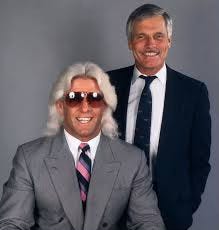
Turner loved wrestling because it had been a mainstay of the regional television station he owned, which he eventually broadcast nationally to cable to become the nation’s first “superstation.” As regional wrestling promotions in the south began consolidating, Turner eventually bought the largest of them, which could claim to represent the National Wrestling Alliance, the largest alternative in the country to the World Wrestling Federation. From then on, wrestling would cease to be hyper-regional and companies would compete on a national basis, with the now WWE.
Around that time, Turner also launched the first national cable news network and with that he took news national and global well before the internet sealed the deal. CNN brought us 24-hour coverage, non-regional diction and landed the final blow on late edition newspapers. Of course, we had national news before this, but as a complement to local. CNN inspired all sorts of cable competition that inspired a ruckus that marginalized local points of view. When you look at the cable news wars you see not a polyphonic spree of regional voices but a debate amongst folks educated at the best schools or molded in well-funded think tanks. For all the good that CNN accomplished, it’s still the cause of everything satirized in the two Anchorman movies.
Economic forces grow towards national and even global markets. That’s what “scaling” means after all — using the same processes to reach more and more people at either a fixed cost or one that rises more slowly than the value of the market. But just like the scaling of industrial farming, specialty chemicals and manufacturing has externalities like pollution, the scaling of media and entertainment extracts an uncompensated cost from society by flattening our culture.
When I was growing up I liked Marvel Comics, Star Wars and Star Trek (I know, shocker). Marvel and Star Wars are now owned by Disney. Star Trek has largely been owned by Paramount in my lifetime, but those characters and ideas are being merged with Warner Brothers, which owns D.C. Comics, the Warner film library and studios and HBO, a massive contributor to culture in the era of prestige television. One company has the power to make Tony Soprano fight the Green Lantern and nobody can stop them. It’s insane.
And, it’s not that I’m worried about Hollywood executives playing with action figures under the guise of making movies so much as that our culture is now mired in those things that broke through the regional markets in the last century. You could experiment in local markets because the scale was accessible to individuals and small collectives. You could be Eric Bogosian or Ann Magnuson working the East Village performance art scene in the 1980s or, you could be Basquiat or Madonna and you could break out from the local. Corporations controlled everything back then, too. But they were fragmented, they had to take risks.
George Lucas marketed the original Star Wars trilogy as just part of a larger story. Well, he should have left the rest of the story to our imaginations, not because what he added before and what Disney added after detracted from the whole but because it fed a beast of only making films that had been successful before. It fed a culture that debates whether a black man or a woman can “play James Bond” rather than a culture that creates new black and women spies who are as cool as James Bond but have their own names and stories. Ask not if Sam Wilson can be Captain America, ask if you can make a character who can speak to your country in 2026.
For Ted Turner, pro wrestling was a thing he appreciated an entertainment and as rating ballast for his fledgling cable network. Turner was never “in the wrestling business,” he was a cable innovator who offered wrestling as an expression of his tastes and a nod to where he came from and the audiences who brought him such great success that he was once able to pay the unpaid dues that the United States owed the United Nations.
For Vince McMahon, wrestling was a core business but one he desperately wanted to outgrow so that he could become like Turner — a media executive with a little wrestling in the mix. McMahon pitted his wrestling company against the evil “Billionaire Ted.” If Turner noticed, he never let on. He had to have noticed, though. He must have been amused (and certainly not threatened).
When Turner sold his company to AOL (ha!) in 2000 he had to give up control. The executives who took over hated the wrestling part of the company. It held low prestige with advertisers, it lost money and the main guy probably kept yelling “woo” in their faces, while not wearing anything under his sequined robe during meetings. So, they axed it.
A quarter century later, McMahon sold his company to the owners of UFC, an unscripted combat sport that started out so anarchic and brutal that even the humanitarians of boxing looked down on it as “a human cock fight.” Actually, that was Senator John McCain and he was not a humanitarian of boxing at all. He was husband to the owner of a Budweiser beer bottling operation that sponsored boxing when UFC emerged in the 1990s. While I’m sure his moral outrage was genuine, it was also well compensated.
In his sale to UFC (corporate name: TKO) McMahon lost control of his company as well. One of the things that the new corporate owners noticed was that McMahon had kept his ticket prices too low. Back in the era of Hulk Hogan, when McMahon’s company really hit the big time, the strategy was to price tickets so that whole families would attend the events and even buy concessions and merch. Crass idealism, said the new owners. Socialism, even. Now they sell experiences to the hyper-wealthy. Why bring in ten families, each on a stretched budget, when you can sell a five-figure “experience” to a rich kid that involves a front row ticket, social time with the performers and even a tour of their tour buses? Why have to lie about packing 93,000 people into the Pontiac Silverdome to see Hogan vs. Andre when Saudi Arabia’s royal family will pay to have Wrestlemania over there, in an arena they put up in a month, filled wall-to-wall by decree?
Would the old territory promoters have sold out to the global elite the way TKO does? Absolutely. Probably faster, and for less. These were cigar-chomping cutthroats, after all who didn’t know Wharton from a wrist lock. But the system didn’t enable it the way it does now.
And it all started with the rise of cable, the nationalization of everything and the flattening of culture. I know you meant well, Ted.
Wrestling on the local level (when I was a kid local wrestlers like Bobo Brazil and Lord Layton were as much Detroit sports legends as Gordie Howe) was authentic American culture.
I miss local Cable Access TV stations. Growing up in Pittsburgh, we had a show that featured to DJ's who played music videos that MTV wouldn't even touch.
My dad was a local news reporter for fifty years. Almost ever reporter treated it as a stepping stone to get to a larger market. CNN only made this worse.
regarding wrestling, for a half a minute, it looked like roller derby's return might actually have brought that sense of regional community back. The problem (besides making it profitable) was
that the most enthusiastic champions aged out of it.