How to Read Books (and why)
A short post, with thanks to Joseph Campbell.
Today I caught glimpse of another article shared on social media where university professors lament that they cannot assign book length texts to their students because they have to teach them “how to read,” first. Obviously, these undergraduates are not illiterate but when it comes to longer works they have problems with the solitude and sustained concentration that even a short novel, work of creative nonfiction, or difficult historical or philosophical analysis demands.
Hey, I am a reader and I sympathize. Some books are hard. Jean Paul-Sartre’s The Nausea or James Joyce’s A Portrait of the Artist as a Young Man are short works, but they are not easy going. I frequently encounter books that bash my brains out, and I say this waiting for the new Thomas Pynchon to arrive, not knowing if I will get through it on the first read until I try. William Faulkner often perplexes me and I naturally prefer the more straightforward storytelling of his contemporaries like F. Scott Fitzgerald, Ernest Hemingway and Sherwood Anderson. Sometimes, Gertrude Stein rips me right through a book and sometimes I just hit a wall and think my brain isn’t good enough for what she’s asking. My second reading of Infinite Jest, done decades after the first, just proved to me that my first reading was wasted time. Reading ain’t easy!
Because my son is getting Shakespeare assigned in high school, I’m going back to the bard. I started with Julius Caesar and just read Antony and Cleopatra as the sequel. I plan to do the other two Roman plays (Coriolanus and Titus Andronicus) soon, while I have momentum and interest. Because these two rereads were also like new reads for me, as I haven’t cracked those texts in many years.
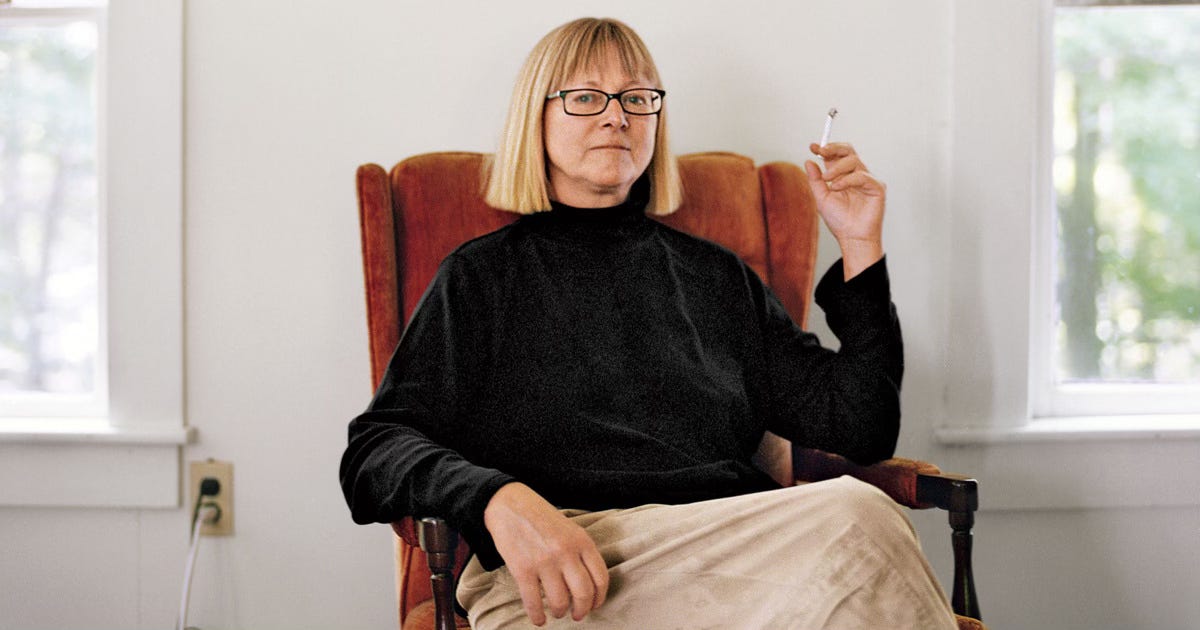
When I mentioned the laments of the college professors, The Renaissance Son remarked that they cannot teach their students to read because each text requires its own approach. There is not one way to approach a book or poem or script. He’s 15. I should listen to him more closely. The Artist Wife and I talked to him about eliminating distractions to deal with longer texts, with the Artist joking about constant intrusions from the game Clash of Clans not helping. That really is a good reason to read on paper (physical books never interrupt you with alerts from other apps demanding your attention). The weakness with books is that they are generally consumed alone and it’s hard to share the wonderful moments you might have with them with people who have not read them as well. This was, to me, one of the miracles of college, where everybody had to show up to discuss the same book together in a kind of book club for those of us who also desperately need to be graded.
When I was in high school, our senior year English teacher assigned each of us a writer to follow for the year, where we would write one paper or create one presentation based on their works, per quarter. My best friend was assigned Mark Twain. I was assigned Woody Allen. This teacher paid a lot of attention to us.
What I didn’t know at the time was that he was teaching according to advice given by the great mythologist and professor Jospeh Campbell, who told his students to find a writer who spoke to them and to read everything they have written. Like I have, in my life, seen all of Allen’s movies, read all of his prose and plays and have seen many of his plays performed live. I know his work inside and out and I know his sensibility and I even know his philosophical beliefs. I know, for example, that he considers love to be an involuntary phenomenon and that this informs his entire worldview. I’ve done the same with Fitzgerald and Hemingway. I’ve even read Hemingway’s newspaper articles and his poems.
The idea is to choose a writer who speaks to you and to enter into a long, personal conversation with them. This conversation, often with somebody dead or socially unavailable to you, is the point of reading, but this is an idea that isn’t taught anymore because we are no longer emphasizing the importance of inner experiences and how they effect our relationships with the outside world.
In a weird way, I wonder if younger people don’t consider reading too passive an activity because, as I ventured, the books don’t beep back or even acknowledge you as you progress. We are so used to feedback, even if it’s artificial, from being awarded fake coins in a video game world to having an AI chatbot praise our question before answering it in a way that validates us, even as it imparts information. What’s really important, though, is that this reaction we’re getting isn’t from another human. When you’re reading a novel or looking at art or listening to music made by people, there really is somebody on the other side of the intellectual exchange.
My son is right that every text makes its own demands. What I’d like to see teachers do is proselytize for the human connection and to remind people that developing a patience and interest in reading will allow you to enter a long conversation, as Campbell described, with any author at any time. Just this year, I started one with Helen de Witt, whose first big novel was published 25 years ago. I’ve been reading everything by her that I can get my hands on and guess what’s my reward? She has a new one coming out, co-authored with journalist and writer Ilya Gridneff, right after the Pynchon. Maybe I’ll be having a new conversation with Gridneff, too?